
Israeli Detention of Journalists and Volunteers of the Global Sumud Flotilla Violates Human Rights and Threatens Press Freedom
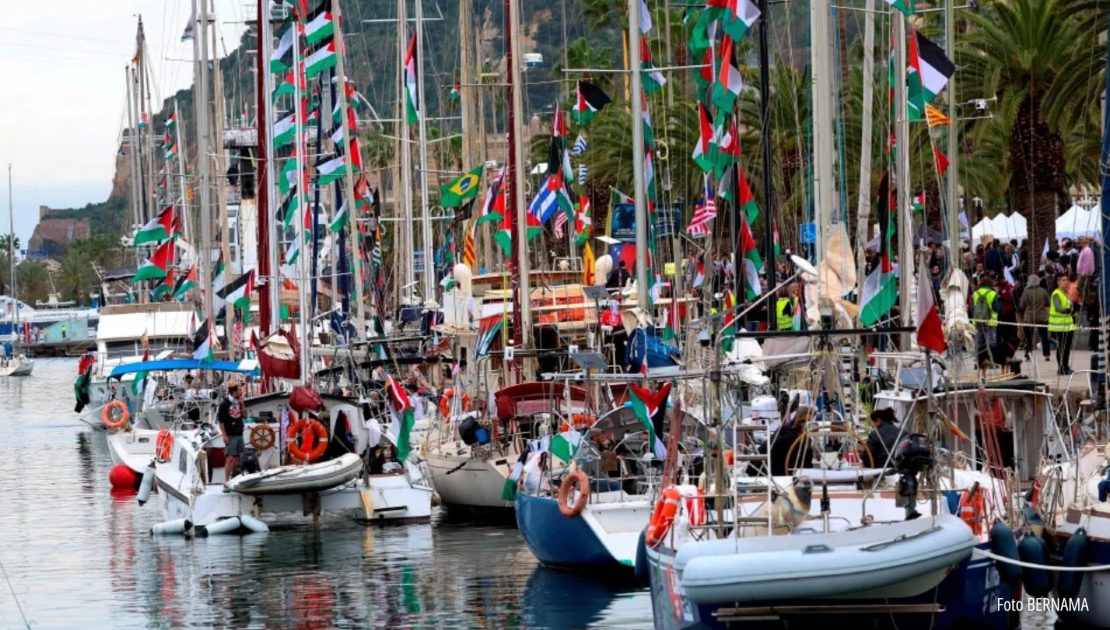
Jakarta, 20 May 2026 — The Israeli Navy has once again intercepted the civilian fleet of the Global Sumud Flotilla 2.0 as it sailed toward Gaza to deliver humanitarian aid. According to the mission’s organisers, 41 of the 54 vessels in the flotilla have so far been intercepted in the Eastern Mediterranean, while a number of others remain en route to Gaza. The fleet was carrying 426 participants from 39 countries when it departed from Türkiye as part of an international civilian effort to break the blockade and open humanitarian access for the people of Gaza.
Among those on board are Indonesian nationals, including journalists carrying out professional reporting. The Indonesian Ministry of Foreign Affairs has confirmed that nine Indonesian citizens joined the mission under the Global Peace Convoy Indonesia banner. Five have reportedly been detained by Israeli forces, while four others remain aboard two separate vessels near Cypriot waters and continue to face the risk of interception. Indonesian journalists confirmed to be part of the mission include Bambang Noroyono and Thoudy Badai Rifan Billah of Republika, Andre Prasetyo Nugroho of Tempo TV, and Rahendro Herubowo of iNews.
Responding to the situation, LBH Pers holds that the interception and detention of journalists, humanitarian volunteers, and civilian crew members of the Global Sumud Flotilla cannot be treated as an ordinary maritime security incident. The incident touches on more fundamental concerns: the protection of civilians, the safety of journalists, press freedom, and the right of the international public to receive information about the humanitarian crisis in Gaza. When civilian vessels carrying humanitarian aid are intercepted and their crews detained in what has been reported as international waters, the obstruction extends beyond the mobility of volunteers to the independent monitoring of the humanitarian situation itself.
The presence of journalists within a humanitarian mission carries a public function that cannot be dismissed. Journalists are there to document facts, verify information, and convey to the public the realities that are often obscured by access restrictions, propaganda, and armed violence. In the Gaza context, journalistic work has become all the more essential, given that independent access to information about civilian conditions is under severe strain. The arrest of journalists in the course of their reporting must therefore be read as an act that risks impeding the public’s right to information and narrowing the space for accountability over an ongoing humanitarian crisis.
Under international humanitarian law, journalists carrying out professional work in conflict zones must be classified as civilians rather than combatants. This position rests on the principle of distinction, the foundational rule requiring parties to a conflict to distinguish between combatants and civilians in every military operation. Article 48 of Additional Protocol I to the Geneva Conventions 1949 provides that military operations may be directed only against military objectives. Consistent with that rule, Article 79 (1) and (2) of Additional Protocol I affirms that journalists engaged in dangerous professional missions in areas of armed conflict shall be considered civilians and protected as such, provided they take no direct part in hostilities. The detention of journalists in the Global Sumud Flotilla mission therefore cannot be separated from the broader questions of civilian protection and press freedom in armed conflict. Such measures risk blurring the line between journalists and combatants, while producing a chilling effect on independent reporting of the humanitarian crisis in Gaza.
The same actions must also be examined through a human rights lens. The detention of civilian crew members and humanitarian volunteers raises serious concerns regarding the right to liberty and security of person, the right to be free from arbitrary detention, and the right to seek, receive, and impart information. These rights are guaranteed under the International Covenant on Civil and Political Rights, particularly Articles 9 and 19. Where journalists and volunteers carry no weapons and are engaged in a humanitarian mission, any restriction of their liberty must be tested strictly against the standards of legality, necessity, proportionality, and respect for human dignity.
LBH Pers notes that the Indonesian Government, through the Ministry of Foreign Affairs, has condemned Israel’s actions, monitored the condition of Indonesian nationals, and coordinated with several Indonesian missions in the region to prepare protective measures, including the possible issuance of a Travel Document in Lieu of a Passport (Surat Perjalanan Laksana Paspor) and medical support where needed. The Ministry of Communication and Digital Affairs has condemned the detention of Indonesian journalists and stressed that journalistic work in crisis situations must be respected and afforded a safe operating space. These initial responses, however, will fall short unless promptly followed by concrete, measurable, and publicly transparent steps toward securing the safety and release of those detained.
The absence of diplomatic relations between Indonesia and Israel presents its own constraints. Yet such constraints cannot serve as a reason for the state to lower the standard of protection owed to its own citizens. The government retains an obligation to secure access to information, verify the physical and psychological condition of detained nationals, ensure communication with their families, and pursue their release and repatriation through every available diplomatic, legal, and humanitarian channel. In circumstances such as these, the protection of Indonesian citizens cannot rest on declarations of priority alone. It must be visible in actions that can be tested.
On these grounds, LBH Pers urges:
- The Indonesian Government, in particular the Ministry of Foreign Affairs, to immediately ascertain the location, health condition, legal status, and access to communication of all Indonesian nationals who have been detained by Israeli forces or remain at risk of interception.
- The Indonesian Government to employ every available diplomatic channel, including through third states, international organisations, the United Nations, the International Committee of the Red Cross, and international journalist protection networks, to secure the immediate release of Indonesian journalists and volunteers.
- The Indonesian Government to provide regular updates to the public and to the families of those affected regarding the protective measures taken, the obstacles encountered, and the plan for the repatriation of all Indonesian nationals.
- The Indonesian Press Council, Press organisations, and the relevant media companies to undertake joint advocacy to safeguard the safety of Indonesian journalists, including by pressing for international protection mechanisms for journalists detained in the course of humanitarian missions.
- Israel to immediately release all journalists, volunteers, and civilian crew of the Global Sumud Flotilla, guarantee their safety while in Israeli custody, and provide them with consular access, legal assistance, medical care, and communication with their families.
- The international community to stand in solidarity and to urge an immediate halt to all forms of human rights violations and breaches of international law that Israeli forces continue to perpetrate against the people of Gaza and humanitarian volunteers.
The detention of the journalists and volunteers of the Global Sumud Flotilla is not merely an attack on the individuals aboard those vessels. It is also an attack on journalistic work, on the public’s right to information, and on humanitarian solidarity with the civilians of Gaza. In times of crisis, the world needs open humanitarian access and independent witnesses, not the silencing of those who seek to open such channels and bring the facts to the public.